
Executive Summary
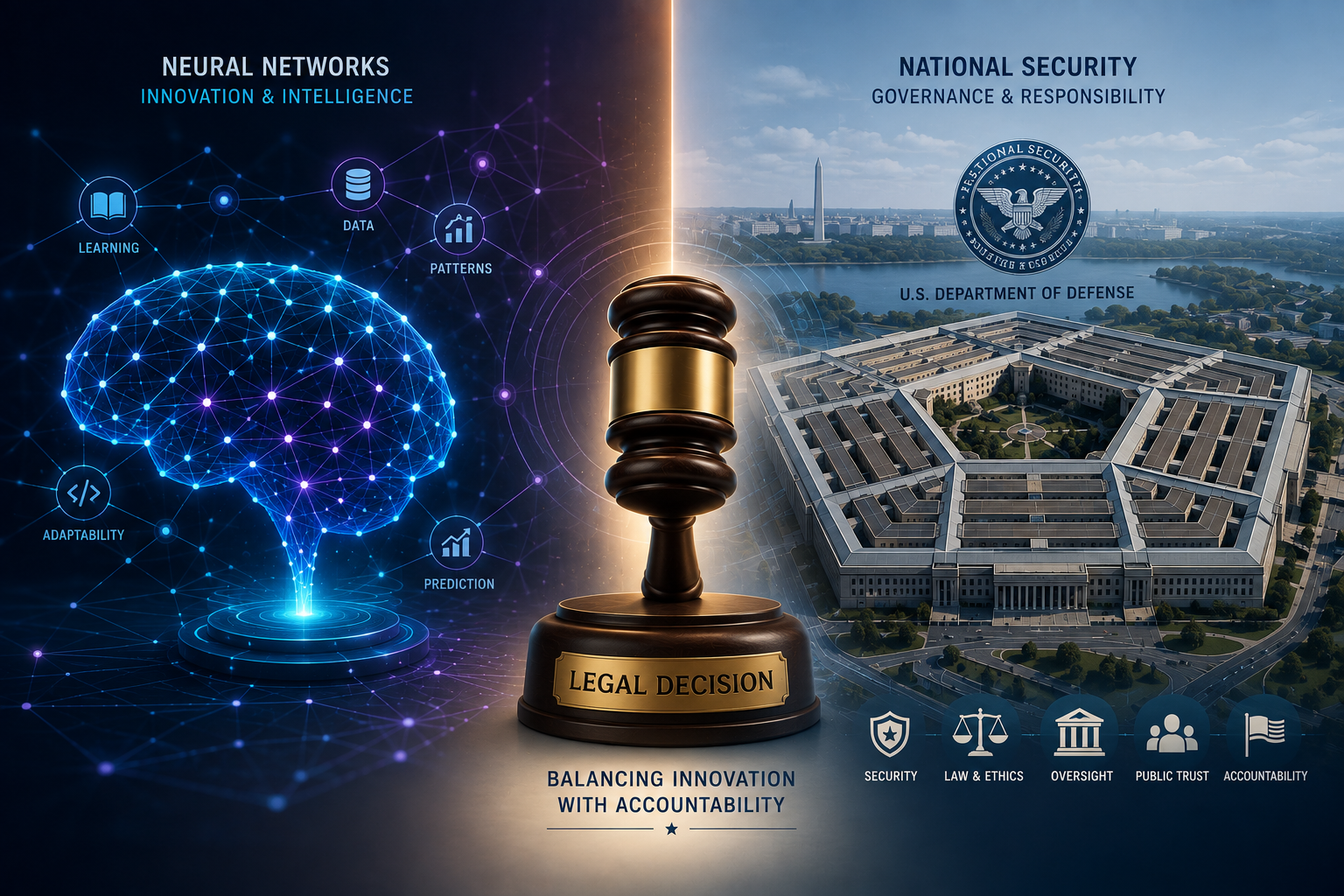
A U.S. District Court has issued a landmark ruling finding that the Department of Defense (DoD) acted unlawfully when it designated Anthropic as a military supply chain risk. The court concluded that the Pentagon’s retaliatory action stemmed from Anthropic’s refusal to modify its core safety guardrails for defense applications. This decision invalidates the administrative restriction and establishes a crucial legal precedent regarding federal regulatory authority over commercial artificial intelligence policies.
Introduction
In a pivotal legal battle between the federal government and the commercial technology sector, a federal district court ruled that the U.S. Department of Defense exceeded its statutory authority by penalizing AI developer Anthropic.
The lawsuit centers on the Pentagon’s attempt to classify Anthropic under national security supply chain risk rules. The court determined that the Department used administrative mechanisms to retaliate against the company after it declined to alter the safety boundaries of its flagship AI model, Claude, for specific military uses.
This ruling provides clear boundaries regarding how executive agencies can enforce vendor compliance without infringing on established administrative procedure laws.
What Happened?
The dispute originated when the Department of Defense sought to deploy Anthropic’s Claude models across sensitive operational networks. During contractual negotiations, defense officials requested the removal or relaxation of specific built-in safety filters—specifically those restricting autonomous weapon targeting, critical infrastructure manipulation, and offensive cyber operations.
Anthropic maintained its standard safety framework, stating that its core safety architecture applies universally across both commercial and government deployments.
In response, the Department of Defense invoked Federal Acquisition Supply Chain Security Act (FASCSA) provisions to designate Anthropic as a supply chain risk. This administrative action restricted primary contractors and defense agencies from procuring Anthropic’s software services.
Anthropic filed a federal lawsuit challenging the designation, alleging the decision was arbitrary, capricious, and a direct attempt to punish the company for its internal safety policies.
+---------------------------------------------------------------------------------+
|                                 DISPUTE TIMELINE                                |
+---------------------------------------------------------------------------------+
| 1. Contract Negotiation  --> DoD requests removal of AI safety guardrails.     |
| 2. Vendor Refusal        --> Anthropic retains model safety boundaries.        |
| 3. Pentagon Designation  --> DoD flags Anthropic under FASCSA supply risk rules.|
| 4. Federal Challenge     --> Anthropic files suit alleging improper retaliation.|
| 5. Court Ruling          --> District Court strikes down Pentagon designation.  |
+---------------------------------------------------------------------------------+
Why It Matters
This case sets a major legal precedent at the intersection of national security, federal procurement law, and commercial AI safety policy.
- Limits Executive Overreach: The decision reinforces that federal supply chain risk mechanisms cannot be repurposed to penalize vendors involved in policy disagreements with contracting agencies.
- Protects Commercial Safety Directives: AI companies retain the legal right to establish uniform safety guardrails without facing administrative sanctions from defense procurement channels.
- Clarifies Federal Procurement Rules: The ruling clarifies that administrative risk designations require objective technical vulnerabilities rather than policy disputes.
Technical Explanation: FASCSA and Supply Chain Risk Mechanics
The legal challenge centered on the legal application of the Federal Acquisition Supply Chain Security Act (FASCSA).
- Intended Scope of FASCSA: Enacted to prevent foreign surveillance, hardware tampering, and direct security vulnerabilities within federal technology pipelines.
- The Legal Overreach: The court found that the Department of Defense misapplied these risk mechanisms. The judge noted that a vendor’s standard product parameters do not constitute a hardware or software vulnerability under federal law.
- Separation of Protocols: The ruling emphasizes that programmatic guardrails within software models differ fundamentally from structural supply chain risks, such as malicious code or foreign interception.
Key Highlights of the Ruling
- Vacation of Risk Designation: The court officially invalidated the Pentagon’s administrative order against Anthropic.
- Protection of Technical Guardrails: The decision recognizes that commercial developers can maintain uniform safety standards across public and private sector deployments.
- Administrative Procedure Violations: The judge ruled that the Department of Defense violated the Administrative Procedure Act (APA) by issuing a designation unsupported by technical evidence.
Benefits of the Decision
| Stakeholder Group | Direct Outcome |
| Commercial Technology Vendors | Protection from administrative retaliation when refusing modifications to standard terms of service. |
| Federal Defense Agencies | Clear operational framework for procuring off-the-shelf commercial software without administrative friction. |
| AI Safety Researchers | Preserved ability to establish uniform safety guardrails across both civilian and government applications. |
Industry Challenges Ahead
Despite the ruling, structural friction remains between commercial software standards and defense requirements:
                  +----------------------------------------------+
                  |           CHALLENGES POST-RULING             |
                  +----------------------------------------------+
                                         |
         +-------------------------------+-------------------------------+
         |                                                               |
         v                                                               v
+----------------------------------+                           +----------------------------------+
|      Contract Specifics          |                           |    Procurement Uncertainty       |
| Defense procurement often        |                           | Federal agencies face ongoing    |
| mandates tailored parameters     |                           | ambiguity when integrating       |
| that conflict with vendor        |                           | dual-use commercial technologies |
| global deployment policies.      |                           | under standard framework rules.  |
+----------------------------------+                           +----------------------------------+
Future Outlook
The decision will likely prompt a structural review of federal acquisition policies concerning dual-use artificial intelligence systems.
Congress may consider targeted updates to FASCSA to clarify the distinction between cyber vulnerabilities and policy disagreements. Meanwhile, defense agencies will need to establish standardized procurement channels that accommodate commercial AI guardrails while fulfilling defense mission requirements.
Our Analysis
This ruling provides necessary legal clarity for the expanding commercial AI industry. By invalidating the improper use of supply chain risk designations, the court has prevented administrative processes from being weaponized to bypass commercial software policies.
Moving forward, defense contracting must adapt to standard software environments rather than using regulatory sanctions to enforce custom modifications. This balance is critical for maintaining robust commercial innovation alongside government procurement needs.
Frequently Asked Questions
What was the Anthropic Pentagon lawsuit about?
Anthropic sued the U.S. Department of Defense after the agency designated the company as a supply chain risk for refusing to modify its commercial AI safety guardrails for defense applications.
Why did the court rule against the Department of Defense?
The court found that the Pentagon misapplied supply chain safety laws to retaliate against a vendor during a contract dispute, violating federal administrative procedure rules.
Does this ruling force the Pentagon to work with Anthropic?
No. The ruling invalidates the supply chain risk designation, allowing Anthropic to bid on defense contracts. It does not mandate that the DoD select Anthropic for specific programs.
What is the Federal Acquisition Supply Chain Security Act (FASCSA)?
FASCSA is a federal framework designed to exclude technology vendors that pose genuine cybersecurity or foreign intelligence risks from government procurement networks.
How does this affect other commercial AI developers?
The ruling protects commercial software developers from administrative penalties when maintaining consistent safety parameters across government and commercial markets.
Conclusion
The court’s decision marks a definitive step in defining the boundaries of federal procurement power over commercial software vendors. By striking down the Pentagon’s supply chain designation, the judiciary has affirmed that administrative regulatory tools cannot be used to force changes to commercial safety policies.