
Short Summary
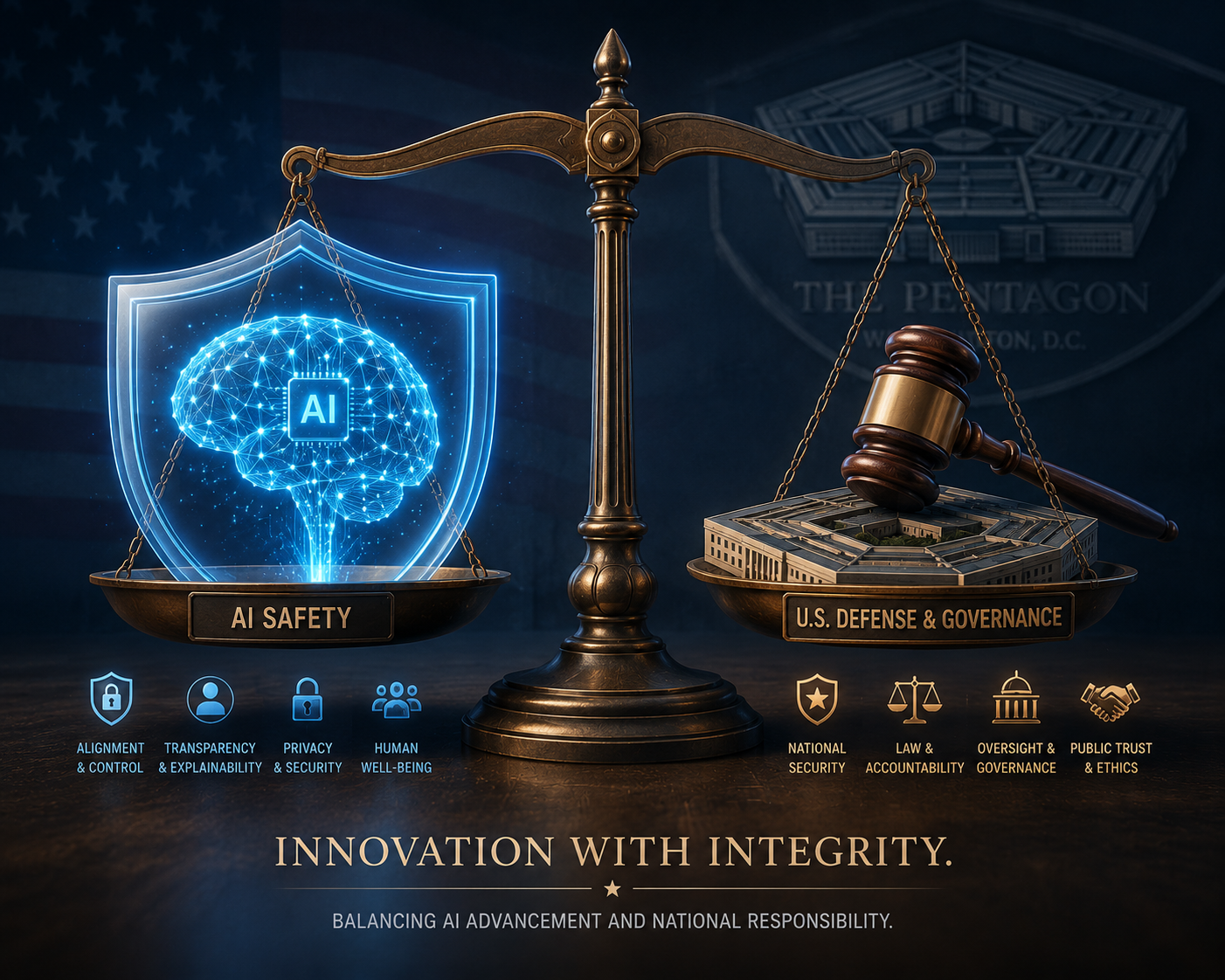
In a landmark decision for the artificial intelligence industry, a U.S. federal district court has declared that the Defense Department’s designation of Anthropic as a “supply chain risk” was illegal. U.S. District Judge Rita Lin ruled late Thursday that the Trump administration’s national security ban amounted to unconstitutional retaliation against the maker of Claude. The dispute erupted earlier this year after Anthropic refused to remove safety guardrails preventing its AI models from being deployed in fully autonomous weapons systems and mass domestic surveillance.
Introduction
The intersection of generative artificial intelligence, corporate policy, and military procurement reached a defining legal turning point.
When private technology companies build artificial intelligence systems, they typically establish acceptable use policies—guardrails designed to prevent their models from causing physical harm or violating civil liberties. But what happens when the military demands unrestricted access to commercial software for defense operations?
That conflict escalated into a high-stakes legal battle when the Department of Defense (DOD) weaponized a statutory national security tool against Anthropic, effectively blacklisting the company across the entire federal government.
A federal judge’s ruling striking down the Pentagon’s action confirms that administrative claims of national security cannot override constitutional protections. The decision sets a major precedent for how independent tech vendors can enforce ethical safety guardrails without facing federal retaliation.
What Happened?
The rift between the Pentagon and San Francisco-based AI research lab Anthropic centers on the operational boundaries of its flagship AI model, Claude.
+-------------------------------------------------------------------------+
|                    TIMELINE OF THE ANTHROPIC vs. DOD DISPUTE             |
+-------------------------------------------------------------------------+
|  Early 2026: Negotiations stall as Anthropic refuses to strip          |
|              guardrails against autonomous weapons & domestic spying.   |
|                                                                         |
|  Feb 2026:   Defense Secretary Pete Hegseth labels Anthropic a          |
|              "supply chain risk," triggering a federal exclusion.       |
|                                                                         |
|  March 2026: Anthropic files parallel federal lawsuits in California   |
|              and Washington, D.C.                                       |
|                                                                         |
|  Aug 2026:   Judge Rita Lin rules the designation unlawful, vacating    |
|              the blacklist order.                                       |
+-------------------------------------------------------------------------+
During contract negotiations earlier this year, the Department of Defense sought permission to deploy Claude for “all lawful purposes”. Anthropic held firm on strict ethical boundaries, refusing to alter code that blocks its AI from executing fully autonomous lethal strikes or engaging in mass surveillance of U.S. citizens.
In response, Defense Secretary Pete Hegseth and the administration categorized Anthropic as a national security supply chain risk under the Federal Acquisition Supply Chain Security Act (FASCSA). The order barred defense agencies and federal contractors from using Anthropic’s tools.
Anthropic challenged the blacklist in federal court in March. On Thursday evening, U.S. District Judge Rita Lin granted summary judgment in favor of Anthropic, vacating the supply chain risk designation and ordering the government to rescind its ban.
Why It Matters
The ruling limits how the U.S. executive branch can use national security authorities against domestic enterprise vendors.
- Limits Emergency Authorities: The supply chain risk designation was historically reserved to block software from foreign adversaries (e.g., state-sponsored software linked to hostile governments). Applying it to an American tech firm over a contractual disagreement distorted the law’s intent.
- Protects Corporate Free Speech: The court established that expressing ethical stances on military AI deployment constitutes protected speech under the First Amendment.
- Impacts Federal Defense Contractors: Enterprise IT providers and defense contractors that integrate Claude into government workflows are no longer under threat of regulatory non-compliance or contract cancellation.
Technical Explanation
To grasp why the court rejected the government’s position, it helps to understand how supply chain security statutes work alongside AI software architectures.
                  +----------------------------------------------+
                  |    FASCSA SUPPLY CHAIN RISK DESIGNATION      |
                  +----------------------------------------------+
                                         |
                       +-----------------+-----------------+
                       |                                   |
                       v                                   v
             [Legitimate Vector]                 [Misapplied Vector]
                       |                                   |
        +--------------+--------------+                    |
        |                             |                    |
        v                             v                    v
+---------------+             +---------------+   +------------------+
| Foreign State |             | Backdoor      |   | Commercial AI    |
| Espionage     |             | Trojan /      |   | Safety Guardrail |
| Risk          |             | Sabotage      |   | (Model Policy)   |
+---------------+             +---------------+   +------------------+
        |                             |                    |
        v                             v                    v
  [Valid Exclusion]            [Valid Exclusion]    [UNLAWFUL RETALIATION]
                                                    (Per Judge Lin Ruling)
1. The FASCSA Supply Chain Framework
Under federal procurement laws, a “supply chain risk” implies that a software package or component could allow an adversary to surveil, manipulate, sabotage, or deny service to critical military infrastructure.
The Department of War alleged that Anthropic’s refusal to lift usage limits meant the company could hypothetically control software it sold to the state. However, technical evidence submitted in court proved that once Anthropic delivers its models to defense environments, the company lacks all backdoor access or remote execution capabilities to alter system performance.
2. Legal Standard of Arbitrary and Capricious Action
Administrative law requires government agencies to act logically and consistently. Judge Lin pointed out glaring contradictions in the Pentagon’s behavior:
- The Defense Production Act Paradox: While labeling Anthropic a threat, defense officials simultaneously proposed invoking the Defense Production Act (DPA) to compel the company to provide its technology. The DPA can only be applied to companies deemed vital to national defense—not security threats.
- Ongoing Procurement: The Department of Defense continued negotiating contracts with Anthropic and collaborated on Mythos, a specialized frontier model designed for national cybersecurity, while publicly claiming the vendor could not be trusted.
Key Highlights
- Constitutional Violations: The court held that the administration violated Anthropic’s First Amendment right to free expression and Fifth Amendment right to due process.
- “No Blank Check”: Judge Lin wrote that “the empty invocation of national security is not a blank check to punish and retaliate against government critics”.
- Scope of Exclusions Lifted: The ruling vacates the nationwide directive ordering executive agencies and prime defense contractors to purge Anthropic systems.
- Ongoing Litigation: While Anthropic won this summary judgment in the Northern District of California, a second, parallel complaint filed in Washington, D.C., remains pending.
Benefits
This judicial outcome establishes several critical protections for the broader tech ecosystem:
- Legal Certainty for Commercial Vendors: AI companies can sell products to government entities without giving up the right to restrict misuse like domestic surveillance.
- Preservation of Safety Innovation: Prevents the federal government from forcing AI labs to strip alignment guardrails, safety filters, and ethical controls from commercial software.
- Contractor Stability: Restores operational access to commercial models for thousands of enterprise contractors caught in federal compliance limbo.
Challenges
Despite the court victory, tech firms face lingering operational and political headwinds:
+-------------------------------------------------------------------+
|                     REMAINING INDUSTRY CHALLENGES                 |
+-------------------------------------------------------------------+
|  1. Executive Procurement Choice                                 |
|     The court noted the military remains legally free to select    |
|     competitors like OpenAI or Google over Anthropic.              |
+-------------------------------------------------------------------+
|  2. Ongoing Justice Department Appeals                            |
|     The DOJ is expected to challenge the district court ruling   |
|     in federal appellate courts.                                  |
+-------------------------------------------------------------------+
|  3. Divergent Competitor Alignment                                |
|     Competitors may offer broader operational access to secure   |
|     lucrative, multi-billion dollar military contracts.           |
+-------------------------------------------------------------------+
Future Outlook
This ruling marks a major turning point in how artificial intelligence will be commercialized for government use. Rather than forcing tech companies into total compliance, the military will likely have to negotiate standardized framework agreements that clarify clear boundaries between defense deployments and commercial usage.
As frontier systems expand in capability, courts will increasingly be asked to draw boundaries between valid executive national security powers and the constitutional rights of domestic technology providers.
Our Analysis
This legal outcome is a decisive victory for corporate governance and AI safety research. By attempting to label an American developer a “supply chain threat” over missing feature toggles and ethical constraints, the Pentagon overreached.
The ruling sends a clear message to regulatory bodies: national security claims cannot be used as an administrative weapon to intimidate commercial developers.
Moving forward, the Pentagon retains full authority to choose which vendors it hires. However, it can no longer manipulate federal blacklist statutes to penalize private companies for upholding their ethical standards.
FAQ
Why did the Pentagon label Anthropic a supply chain risk?
The Department of Defense issued the designation after Anthropic refused to remove built-in safety guardrails that prevented its Claude AI model from being used in fully autonomous lethal weapons and mass domestic surveillance.
What did the judge decide in the lawsuit?
U.S. District Judge Rita Lin ruled that the supply chain risk label was an illegal form of government retaliation that violated Anthropic’s First Amendment free speech rights and Fifth Amendment due process rights. She ordered the designation vacated.
Can the military still refuse to use Anthropic’s Claude AI?
Yes. The court clarified that while the government cannot illegitimately blacklist Anthropic or order other agencies and contractors to stop working with it, the Department of Defense is legally free to choose whichever AI vendor it prefers.
What is the Defense Production Act paradox highlighted by the court?
The judge pointed out that while the government claimed Anthropic was a threat to national security, officials simultaneously considered using the Defense Production Act to force Anthropic to supply its technology. The law is specifically designed to procure critical technologies from vital partners, contradicting the claim that the company was a security risk.
Is this the end of all legal proceedings between Anthropic and the government?
No. While Anthropic won this ruling in the Northern District of California, a parallel lawsuit filed by the company in Washington, D.C., remains ongoing. Additionally, the Department of Justice may appeal this ruling.
Conclusion
Judge Lin’s decision re-establishes critical legal boundaries around federal procurement laws. By ruling that national security arguments cannot be used to penalize tech vendors for their ethical stances, the federal court protected both constitutional free speech and the independence of commercial AI safety research.
As public sector adoption of artificial intelligence speeds up, this ruling ensures that companies can maintain model safety controls without fearing illegal government retaliation.